


Okay so hear me out.
I just watched videogamedunkey's The Last of Us Part II follow-up video and it stirred some thoughts in me. I've never played that game but I was following along closely with what he was saying, and it's inspired me. It got me thinking about some of my unusual opinions on a few other games we like, and the idea blew up until I just had to write it down.
So here's why the "murder route" in games doesn't always have to be one-dimensional.
Spoilers for Undertale, Everhood, the Deponia series, Deltarune, and Iji
In Undertale, the conceit of the game, even as far back as the game's Steam trailer, is all about choice and morality. Power is given to the player to choose to spare or kill every monster in the Underground. Now, in the game, you're very much steered toward pacifism. It's the far more rewarding route emotionally and from a story standpoint, and the true lab and the "true final boss" can only be unlocked by befriending and sparing everybody. You're made to feel very good when you act on your care for these characters you've known to love and cherish on your wacky adventures through a cave filled with monsters, dare I say, your cave story.
But there's a flip side to it. There's nothing stopping you from murdering every single creature living in the Underground. In fact, there's a whole lot of content that you can only see by doing so. This is here in part to serve on the game's premise, that you have the power to kill whomever you want, and that's entirely your choice. But this is also very much disincentivized. Undertale goes out of its way to give you many opportunities to back off, to stop your killing spree before you go any further, and prompts you repeatedly to consider the lives of the characters you've come to meet. It's much more impactful if you played the pacifism route first, it really tugs on the heartstrings at times. But there's unique content all the way until the end of the game, including probably the most famous thing to come from Undertale, the sans boss battle.
With a game whose core message is so obviously one of pacifism, you might be wondering why I'd defend the inclusion of a part of the game that explicitly rewards killing every character in the game. It's the tonal opposite, right? It's ironically because of that central message that I think it should be included. If I had to give a name to it, I'd say
Undertale: When sentimentality poisons us
Flowey is an important character in Undertale. He mostly shows up sparingly throughout the plot, watching you from the shadows. He's the first character you meet, and the first thing he does is teach you that people will take advantage of you here and to trust no one, "it's kill or BE killed". He shows up at the start of the game, at the end of the Ruins, and at the end of the game, where he sabotages any chance you had of a happy ending. In the "true pacifist route", we learn he used to be Asriel, a sweet innocent child who lost his human best friend in the war, tried to take revenge, and got killed himself (partially).
But in the genocide route, we learn more about him, some critical details that explains his point of view. He has the power to save and load, like you, the player, and he uses it to save the lives of everyone he cares about. Then he goes back in time to play with these people, doing everything just a bit different to see their reactions. Eventually, he grows bored, and starts testing the waters with the opposite side of the coin, killing everyone just to see what happens. Why? Because he loves them.
That last part isn't explicitly stated by Undertale, it's my interpretation. This conflict Flowey goes through is meant to parallel that of the player. You, presumably by the time you've reached this part of the game, have already saved everybody at least once, and gotten attached - sentimental, even. The true ending of Undertale, the pacifist ending, is an emotional rollercoaster ending on such a high note. It's inspired tons of fan creations from fanfiction to fangames, because people love these characters so much. Hell, Sunny even watched their brother go from regarding the game cynically to really liking Papyrus, and Sunny themself was deeply affected by the story of Undertale - they've told me it was the hope spot in their life that first taught them it doesn't have to be such an unforgiving world. So, my point is that the story is impactful and most players grew very attached to the characters...
So much so that, when they found out there's unique content you can only see by murdering them all, they went there... even Sunny. Why? For the same reasons as Flowey. They've grown so attached to these characters, that every little difference, every hidden line of text, every hidden scene, makes them want more. Until they're scavenging at scraps of dialogue, reading lots of fan theories, and eventually, playing the one part of the game with any content left.
The beauty of Undertale's genocide route is the cognitive dissonance. If you play the genocide route because you want more content out of Undertale, this game that you love (and you'd have to love it to grind all the tedious random encounters), you're like Flowey, or rather, you're going down the same path as him. You're simultaneously murdering everyone you've ever loved, and so attached to these characters that you'd kill them to see more of them. The game prompts you repeatedly to stop, including a few points players have cited as being pivotal moments that made them stop their personal genocide run. For instance, meeting Papyrus on the genocide route is particularly heartwrenching, as he's probably the character who's the most naive, trusting, and easy to take advantage of. He's also the one character incapable of killing you - when you fight him normally, if you reach 0 HP, you survive with 1 HP and he puts you in a cage that's very easy to escape.
So when Papyrus stops you on your murderous rampage, it prompts you to stop and reflect: what you're doing is fun, stimulating, addicting even, but in the process you'll have to kill someone you care about, and even worse, he won't fight back. He spares you immediately and hopes you'll spare him back. This is your lifeline. You can stop now, and go back to the way things should be. But if that desire takes over, the desire to see more, you'll attack him, and he'll die, and you'll have to continue on, with the guilt of it on your shoulders. There's a few other moments too, like a scene where you're prompted to kill a child (followed by a very difficult boss fight if you do), rooms you can enter with signs that people left in a hurry or are trying to help others escape you, and eventually, you reach sans, probably the most popular thing to come out of Undertale.
I really think sans' battle is popular for the wrong reasons. It's like everyone who talked about it and shared it missed why it's included in the genocide route. Basically, this one character who's never done anything to stop you in any other iteration of the game, turns out to be the hardest battle in the game and asks you to defeat a gauntlet if you really want to see your murderous rampage through to the end. But people glamorize and glorify the fight just because it's hard and just because it's exciting. I have similar feelings about the "weird route" in Deltarune, but we'll get to that.
To sum up so far, Undertale is a game all about the importance of friendship, of putting in the effort to befriend people with differences, of showing the world it can be a kinder place. But the presence of the genocide route serves to strengthen this message, rather than contradict it, precisely because of the dramatic irony that you know you have the power to be kind, but choose not to anyway. Hell, just before his battle, sans brings up the theme of the game when he asks you, "do you think even the worst person can change? that anyone could be a good person, if they just try?" Worse, if you win, the entire game world and everyone left in it gets erased by the manifestation of your inner conflict, leaving you with an unsatisfying ending. And that entire time, you're thinking about how much fun you had with these beloved characters before, and how much you wish to see them again, and how empty it is without them around.
Everhood: Don't fear the reaper
Everhood is very much an Undertale-inspired game. The developers clearly loved what they played, and wanted to do their own spin. It doesn't feel derivative, it feels genuinely inspired, and I'd recommend it to Undertale fans, or anyone who loves a good video game OST, as Everhood has an excellent soundtrack.
In Everhood, you play as a silent protagonist named Red, some kind of living doll we know very little about. His arm was stolen by Blue Gnome, a character who you start the game chasing, before he gets taken advantage of, losing his legs and Red's arm to the game's real villains. Blue regrets what he did and joins you, acting as the stand-in narrative voice and providing commentary on the game's events, in place of Red, who doesn't speak. We go through the rest of the game meeting a cast of wacky characters, and once we reach the end, we beat the final boss, and get back Red's arm. Happy ending, right?
Some very important information comes up throughout the game. We learn that the entire cast of characters is immortals. They've lived for possibly thousands of years. Some have become so bored of their prolonged existence that they've created new identities entirely, and lived out new lives (reminds me of the ghouls in Fallout: New Vegas). You're asked by Frog, the tutorial character from the start of the game, to kill everyone, simply because change needs to happen and eternity is stagnant. I agree with this sentiment, but the other characters don't seem to - and that's part of why this one is so nuanced and I can't fully justify it, but still, hear me out.
The second half of the game is very much meant to be a mimic of Undertale's genocide route. There's a few characters who fight you who didn't before, brand new songs, there's some who try to stop you, hell, even the menu cursor comes alive to stop you. But ultimately you do kill everyone, with one of the last ones being Blue, your friend and ally who's stood by you for the entire game. Without his legs, he's powerless to flee you, and calmly accepts his death, submitting to you. It hurts to kill him, it really does. But then you're treated to the game's finale and ending. There's one more battle left. The universe itself comes to life, in the form of a brilliant shining hypercube, the soundtrack swells, it feels awesome, it's a very rewarding and fun fight, but this time, the song loops until you kill it. The song is called Farewell Battle and it really feels like a reflective sort of song, while still being exciting.
Here's where the path diverges from Undertale's: the ending. Once you kill the universe itself, you enter the afterlife. And here you see all the characters in the game, all united once again, and they're all happy, at peace. You can walk around and talk to everyone, and it really feels like they're thanking you for meeting them and playing with them. This is where to me Everhood redeems itself. You've freed everyone from the prison of eternal, stagnant life. Everyone can finally rest, including you. Everhood is a story about a bunch of friends who loved hanging around each other so much, they decided to do it forever and ever, unchanging. It's about why it's important for there to be an end, because while these characters may be immortal in their world, in our world, everyone has a limited amount of time on earth. If you've dealt with the loss of a loved one, you'll understand what I mean when I say, knowing that someone is going to die will make you feel this urgency, that you'll want to spend more time with them, be closer, so you can enjoy what little there is left to enjoy before it's all gone. This is when people will get closure on things left troubling them, on what's made their relationship the way it was, see if there's any peace that needs to be made, and say goodbye.
There's a series of comics by the artist Jenny Jinya called Loving Reaper. Sunny discovered this series of comics many years ago, and was heavily affected by it. The comics all center around animals facing painful lives, involving things like human error, wildlife being driven to extinction, pets in abusive homes, and more. Each comic ends with a message condoning animal cruelty and teaching lessons about improving the lives of animals. But what makes this series unique is the grim reaper himself. He's not a scary figure, instead, he's merciful. In every issue, he's ultimately saving the lives of these animals, because, unfortunately, their lives are in such a poor place that, try as they might to see it through to the end, they need and deserve rest. And in each one, this is framed as universally the right choice. I have to agree. There's nothing wrong, absolutely nothing wrong with these poor creatures going to their peaceful rest. It happens to everyone, and it will happen to us, and you too.
Everything good must come to an end. That's a philosophy I believe in, and I found that reflected in Everhood (though again, it only hits you right at the end instead of being present throughout, which I do think was a misstep). In a sense, you, Red, are the embodiment of death, the grim reaper if you will, bringing people to their end. Even if the characters don't all show it openly (it's implied some are repressing it), more or less everyone is suffering as a result of being immortal, all for the sake of having more fun for longer, and not knowing when to let go.
That brings me to my next game:
Deponia: In pursuit of a Goal
Deponia is a series of 4 point-and-click adventure games by Daedalic Entertainment (rip) that presents you with a bleak-ass world no one loves living in. Deponia is a planet made of trash, a visage of earth in the far future where everything's been eroded to metal scraps, with everyone left building towns out of the rubble. Everyone living on Deponia is the poor, the underclass, whereas the high class all get to escape to somewhere called Elysium. We find out long into the first game that the elite are planning to blow up Deponia, and use the force of the explosion to fuel Elysium, which is actually a spaceship, in search of a better world. This series is a bit of a hidden gem in my eyes, so I'm happy to highlight it!
In the series, you control an asshole named Rufus, who you find out right from the get-go is the jerk around town. Everyone has their own story of Rufus ruining their lives, and some of them are comically exaggerated. Through many point-and-click adventure puzzles, we see Rufus take advantage of people, betraying their trust, stealing and breaking precious items, lifting everything that isn't nailed down to use in puzzles. But these are all completely necessary to get through the obstacles in our way. And yet, people come back to Rufus, telling him how much he utterly screwed them over, with things that you as the player did. So in a sense, while Undertale and Everhood had "genocide" routes, Deponia has an "asshole" route, except it's the entire series and there's no other way.
Keep in mind, though, that Rufus, as judgemental and stupid as he is, is still a love-to-hate kind of character, and while he does reprehensible things in the name of progress, they are still in the name of progress. That isn't a lie. Rufus meets Goal, a pretty girl who fell from Elysium and needs to get back up. Rufus idolizes her and follows her around, doing everything he can to reach her, even though Goal is supposed to go back to Elysium with Argus, an equally assholish general for Elysium who, it turns out, is a clone of Rufus. Goal at first wants nothing to do with Rufus, and it's implied there's an arranged-marriage sort of situation happening, but it becomes clear later on that she really doesn't want to be in that situation. It's around that time that Rufus learns the elites of Elysium are planning to blow up Deponia, and he doesn't want to be caught in the blast. While he is ultimately self-serving, because he loves Goal and wants to be with her, Rufus is, in a sense, understandable and defensible, because he's living in an awful situation, about to be blown up. As I played through the series, I felt a bit sorry for him, too. Nobody deserves to live like he does, and while the rest of the townsfolk have accepted their life in poverty, naive, optimistic Rufus wants something better. Who can't get behind that?
How does the series tie into my overall point? The ending of the third game, Goodbye, Deponia, and the entire fourth game, Deponia Doomsday.
At the end of Goodbye, Deponia, Rufus barely manages to make it on board the spaceship as Deponia is about to be blown up, but his luck finally manages to run out. He's hanging from a ledge thousands of miles above Deponia, a dizzying distance below him, and he scrambles to come up with ideas on how to get out of his current situation. He goes over everything he can think of out loud with Goal, but unfortunately every single one is not feasible, and in the series' intended conclusion, Rufus lets go. Everything you and Rufus have worked for, reaching your Goal and escaping Deponia, is all for naught. Understandably so, a lot of people were upset at this ending. But here's why I think it works.
Like I said, Rufus and Goal are in bad situations. Ultimately, even though Rufus does win Goal's trust, he comes to realize in those final moments that he's holding her back - physically, in this case. As much as it utterly sucks to support an ending where someone who deserves better is fated to die with the rest of the underclass, it works here because Rufus really has been self-serving throughout the entire series. As much as I rooted for him, he is an asshole and causes people a lot of harm. He doesn't really apologize to anyone or try to make amends. And ultimately, this entire time, his pursuit of Goal was tunnel visioning him. He doesn't have a moment of reflection, necessarily, but I did feel a tug at my heartstrings when I saw him ultimately sacrifice himself for Goal. If you asked me then how he's grown as a character over the series, I wouldn't have been able to point out an example immediately, but I can tell you I felt like he had. The tension and desperation to reach this point really was there, and so when it paid off with a sentimental send-off that ultimately makes someone's life better at the expense of his own, it to me felt good, rewarding even. It was a tragedy, but one I was willing to accept.
...But that's only the end of the third game. There's a fourth game, after all.
Deponia Doomsday: The importance of letting go
Deponia Doomsday, as was explained to me, was created in response to the fan backlash about the ending of Goodbye, Deponia. It's, in a sense, the artists doubling down on the message they were trying to send, and I actually think they did an excellent job. In Deponia Doomsday, we open on a bad-future outcome on a Deponia covered by snow, where Rufus, voiced by Solid Snake (yes, really) drops a nuclear bomb. This turns out to be the aftermath of events you cause later in the game. Our Rufus wakes up, before the events of the first game, with conflicting memories of the entire series. He meets a time traveler, and we get our new "Goal": this version of Rufus will undo the bad ending of the previous game, and find another way to his happy ending.
This game is heavy on time travel. As two cats who love time travel, I really loved this one. The mechanics are so very interesting. It's incorporated into the puzzles, the plot, and it's mind-bending enough that I remember spending hours trying to plot out a timeline of what the fuck actually happened in the game. I had a fantastic time with it. But make no mistake, despite how complex the plot can get, it's still got an emotional core that shines through. We see Rufus' relationships with the other characters further contextualized, including the events that led to his ex dumping him before the events of the first game, and see some more optimism and life in his eyes. Some long-time questions are also answered, like finally getting to see what Elysium actually looks like, where we meet-
Hold up, is that just Flowey?!
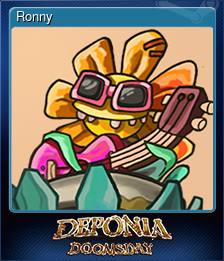
Yeah, he even remembers the things Rufus has done across time loops! Just like Undertale! It has to be intentional. It's a lovely shout-out, in my opinion!
But ultimately, once you reach the end, you're unable to avert the bad fate Rufus arrived at in Goodbye, Deponia, and in fact, your meddling with time travel has only made things worse for everyone. This time the message is painted out much more strongly: know when to let go. You can try and try and try to rewrite history to make things better, but ultimately, you can't have everything, and in this case, your refusal to let go of your Goal causes you to make things much worse than they could've been otherwise ("you" directed at you, the player, Rufus, the protagonist, and "you", the fanbase, who rejected the ending of Goodbye, Deponia). I think it's beautiful, personally.
Deltarune: Taking it too far
We're going full circle now. DELTARUNE needs no introduction. Undertale was massively popular, DELTARUNE even more so. A few years after Undertale's extremely successful release, Toby Fox released a mysterious demo for some kind of successor game called DELTARUNE. This one's pretty strange. It's still not complete, coming out in chapter releases for several years now, expected to have 7 chapters. I don't fully know what to make of it and its themes yet, because, while it's got some great themes going for it, about choices vs the illusion of choice, kids going on amazing adventures, brings back the importance of pacifism from Undertale, and, now with chapters 3 & 4 coming out, the prevalence of pre-destiny and trying to change fate, it's clearly still in the works to become something bigger.
Chapter 1 sees our silent protagonist Kris going to school where they get harassed by local bully Susie, before both are whisked away to a pocket dimension in their school's supply closet, where they meet Ralsei, an important character, and Susie grows to like her new friends, and like being a hero instead of the one everyone expects to be the villain. Chapter 2 in my eyes is more of a spectacle, establishing future plot points, showing off more technical capabilities of the engine, and giving Toby Fox and his team time to show off what they can do. It adds depth to an important character, Noelle, a soft-spoken girl in the same class as Kris and Susie, and sees her thrown into the dark world along with our heroes, exploring her crush on Susie as well as her mixed feelings on her older sister's disappearance under mysterious circumstances. Chapter 3 sees our trio in a TV world, palling around and trying to have a good time, when their TV emotionally manipulates them and makes them stay for longer than they'd like, kidnapping Kris's mother and trying to keep them there forever. Finally, Chapter 4 has Kris and Susie enter a church cathedral-themed dark world, learn of a prophecy predicting all the events of the story, meet the memory of a cool old guy who's passed away, shows more of Noelle's home life including her abusive mother and the space her older sister left behind, and sees Ralsei in several moments of weakness believing he has to force a front of happiness for others' sakes.
Overall a fantastic game so far. The gameplay is fun, the music is catchy, the characters are so memorable and lovable, and the series has a lot of hype surrounding it. In particular, I think Chapter 3 ties in very nicely to my overall point, as well as something else I'll add after.
Chapter 3's main plot revolves around Tenna, the anthropomorphization of Kris's family's TV, who himself is very sentimental about the past, and misses the time they all spent huddled around the TV together. He alludes to many specific memories, including Kris's family's favorite kinds of shows, times the kids stayed up watching things they shouldn't, times they played console games together. It very much evokes vibes of growing up with game consoles and CRTs, and that's a sentiment we share, especially Sunny. But Tenna overgoes some growth during the chapter. He loses everyone, his cast all abandoning him after he becomes so greedy for attention that he causes everyone discomfort. In his weakest moment, he's comforted by Susie, who tells a heartwrenching tale about how she moved from an old town to this one and had to find herself again, her bully persona being a way for her to cope with feeling unwanted. Tenna actually is moved by her advice, and as the gang spares him, he's prepared to hand over Kris's mother Toriel and wrap up the chapter nicely. Then a stinger happens, as it does in Toby Fox games, but I'm not talking about that part.
The chapter in isolation is a very good message on change. Growing up is hard, especially for kids born after 2000, surrounded by technology, and it's so easy to attach so much emotional significance to objects like an old television. It's so easy to lament the past, to get lost in it. But it's important to not let it ruin you. Tenna is wracked by a kind of microcosm sentimentality that the player is in Undertale. He's willing to hurt everyone he cares about just to keep them around for longer. And yet, it doesn't ruin his character. He's redeemed by deciding to let down his guard and be vulnerable again, and after he loses everything, he accepts Kris, Susie and Ralsei as his new friends, and gives back Toriel. He's moving on. This is a very important message to share, I think.
But there's another side to Deltarune... if you've been around the community, you know what I'm talking about. It's very difficult not to hear about it in some form. It's referred to as the weird route, and it's something of a successor to Undertale's "genocide route".
You see, in Deltarune Chapter 1, Toby Fox made it explicitly clear that you're supposed to be a pacifist in this game. Try as you might, you can't kill any enemies in the game. The most control you have over your relationship with your enemies is whether they dislike you or not. The ending changes slightly. But in Chapter 2, it seems Toby changed his mind. He added a secret route that involves, once again, killing all enemies you can - but this time, it heavily centers around Noelle, who's normally very soft-spoken in this chapter and opens up to Kris. In the weird route, you psychologically manipulate Noelle, taking advantage of her trust and harming her. You get to read all her thoughts and watch as she slowly caves in to the darkness you push onto her. You start to break her down and build her back up into someone cruel.
So who the hell would want to play that, right? It's just awful! You force her to murder another named character!! Why would you do this to this poor girl? Hell, it can even evoke memories and traumas for some players. Well, I'll tell you why I think it adds to the experience.
Simply put, it's doing what Undertale did but on a bigger scale. This time, if you want the rest of the exclusive content, you don't just need to kill everything that moves, you also need to cause incredible harm to a vulnerable character. Toby Fox is really trying to make you feel bad for your actions. And he really succeeds. Sunny was able to stomach the genocide route in Undertale with some work, but I got so disturbed playing the weird route that I couldn't finish it. Seeing the ways Noelle becomes so anxious, so afraid of your choices and your power over her, and seeing "your castle town" empty and lifeless, it feels so hollow, so unfulfilling, it feels fucking disgusting, and it made me want to stop.
I think this is Toby Fox, whose message about kindness was misunderstood by people oversharing the sans battle from Undertale, screaming as loud as he can that this is not the right way and you are continuing a cycle of abuse if you do this.
I need to disclose here: I haven't seen the new weird route content from chapter 4 yet. I got so disgusted playing the weird route that I couldn't finish it. I refuse. It's not stopped me from hearing of a few things that happen in it, of course, because the internet is the internet. But here's my hope. I hope that, as the weird route continues (which it will, it's too late to stop now), Noelle becomes even more uncomfortable. I want to see Noelle broken out of it. I want to see Kris's friends call out the player on their harm. I want to see Noelle be the final boss of the weird route, refusing to take any more from you. I want to see it all be worth something.
So that's weird, right? Why am I defending the inclusion of this thing I don't even know everything about? Well, what I've heard about the chapter 4 weird route stuff leads me to believe it's a continuation of the chapter 2 stuff, Noelle is still blindly following the player's will, and you do something that harms her even further. So as far as I'm aware, it stands by my point. The weird route is there specifically to be something you aren't supposed to do. That's weird from a game design perspective though, isn't it? Well...
Undertale and Deltarune's legacies
So I hope I've made myself clear so far that I think it's important to have ambiguous morals and characters in good stories, and that there can be nuance to all kinds of stories, even stories where you kill everyone, or stories where you're a total asshole to everyone just trying to help you. But you might also be wondering, isn't there another way? Why does the content have to exist at all? Especially in Undertale or Deltarune, why should I play a route I hate playing?
First of all, I'm not saying that. You shouldn't play it if it makes you uncomfortable. In fact, that's the point. The content is there to turn you away from violence and further highlight the games' messages. But you might also say, "but I really want to play the secret boss fights on these routes." That's also intentional. Toby Fox is cleverly making you choose between more of a fun game, and letting the characters you love be happy. Which is more important to you, and how far are you willing to go?
It's meant to be reflective, I think. To make you look back at what you've done. The message Toby Fox was trying to send was so important he was willing to add hours of content where you brutally murder everyone in the game, so it must've been a pretty important message. Hell, let's go back to the game's trailer again. The lives of all of monsterkind is in your hands, do you kill them or spare them? Your choices matter, so choose peace. Your choices matter because, look at how much damage you can do with the time and power and energy you have, versus all the good you could be doing that would make everyone happy.
That's also why it's such a tragedy that these routes are as heavily misrepresented as they are. The genocide route was quickly stripped down online to being all about the final boss fight against sans, and it was (understandably) treated as this big challenge, and beating sans is glorified as this incredible accomplishment. It's such a tragedy to me because Undertale is so much more than its gameplay. The people who watch sans fight videos out of context aren't all fans who have played through the game already. They're probably just watching because they heard there's this fucked up and evil route in Undertale where you fight a super hard boss, and they were drawn in on the premise of this vengeful skeleton trying to murder the murderer.
Deltarune is, to me, Toby Fox pushing back against how misunderstood Undertale was thanks to the inclusion of the genocide route. Yes, Toby Fox could have left out the weird route completely! And I think he did consider it - 2 of the released chapters have no significant changes for if you attack everyone. Actually, I heard that, in an interview (I don't have a link :c), Toby Fox defended his choice of putting the ACT button second, stating that peace is a choice you have to conciously make. I love that so much. You need to go to the effort to not just attack enemies blindly. It's been, from the start, an RPG all about subverting the tropes of slaughtering enemies to level up. The friendly RPG where no one has to die.
So, in Deltarune's weird route, you don't kill Noelle, Susie, or Ralsei (at least not yet). Instead, you break Noelle's spirits. You demolish her psyche until she's left committing murder in your name against people you don't like (Berdly). How cruel is that? How could you, the player, not Kris, do this to her? What's wrong with you? These questions are meant to prompt you, the player, to self-reflect, on how far you're willing to sacrifice your values to get what you want, and in the throughline I've been trying to draw between all these games, the idea of killing your darlings, of learning to let go of characters and stories and games you love.
Iji: Pushed to extremes
This is one of the biggest tragedies, to me. Iji by Daniel Remar is a free game that came out before Undertale that did the whole "kill-or-spare video game enemies" thing first - and almost nobody has ever heard of it! It's a fantastic game, and really deserves to be shouted out, so I thought it'd be criminal not to include it here.
The story of Iji follows a young lady named Iji Kataiser, who finds she is one of the last surviving humans following an alien invasion that's left the planet almost completely obliterated. Scientists worked in secret to merge her with biotechnology gathered from fallen alien soldiers, making her incredibly strong, in the hopes she could fight back and save humanity. She's understandably extremely distressed about the situation and wants nothing to do with it, but she doesn't have that choice.
Earth has been invaded first by the Tasen, a bunch of aliens whose motives we first assume to be evil, but then we find out they're fleeing from an even greater threat, the Komato, a massive alien species whose entire culture revolves around violence, military, and oppression. A lot of the lore is told through scattered logs you can read in each level left by both Tasen and Komato soldiers. We learn about specific named characters, their backstories, the cause of the conflicts between the Tasen and the Komato, and what led everybody to earth. The exposition is done fantastically, and the lore is rich. There's even incredible details like some classes of Komato being encouraged into violence by having kill counts inside their visor's HUD - that's a really good writing choice I think, especially as a criticism of killing enemies in video games, one of the same things Undertale was a criticism of.
Iji's character is done super well. She starts the journey understandably extremely distressed, with her brother communicating with her over the intercom in the facility. Her brother keeps information from her, like the fact that humanity is almost gone, until she finds out on her own, and she's understandably angry with him. Once she learns the sheer scale of the intergalactic war that's happening here, she starts to feel bad for the Tasen, and does her best to send messages to the Komato negotiating peace (if you're peaceful) or threatens to wipe them out as well (if you're vengeful). There's a part where, unless you know exactly what to do, Iji's brother is executed in front of her by an assassin named Asha, causing Iji to break. She starts talking to herself and pretending he's still alive talking to her until the end of the game. She gets understandably pissed off at Asha, and fighting Asha is genuinely extremely satisfying. If Iji's brother dies, Iji kills Asha without your input, in a moment of weakness I love to death as fantastic writing. He did deserve it though, he's talked about even among the Komato as a deranged assassin more violent than almost anyone, and he goes to great length to make Iji's life miserable.
I could gush about Iji and how awesome it is all day, but let's talk about why I brought it up. Despite the awful situation everyone is going through, you can choose to be a pacifist. You can be the idealist and spare everyone you meet. In the second level, you can befriend a friendly group of Tasen who also see things your way. One of them kills the chapter boss for you if you maintain the truce all the way to the end. Later, only if you have zero kills, you'll meet another assassin, Ansaksie. She believes the same ideals as you do, and seems to express sentiments similar to political assassinations. Specifically, the Komato general Tor is coming to earth to settle things once and for all, and she wants to help you stop him. If you agree to help her, she'll kill the next boss, Iosa the Invincible, for you, keeping you at a clean 0 kills. Otherwise, you might be led to spare Iosa's life, which, while in theory the right thing to do, causes Iosa to come back at the end of the game to kill you. This is an example of how you can take pacifism too far.
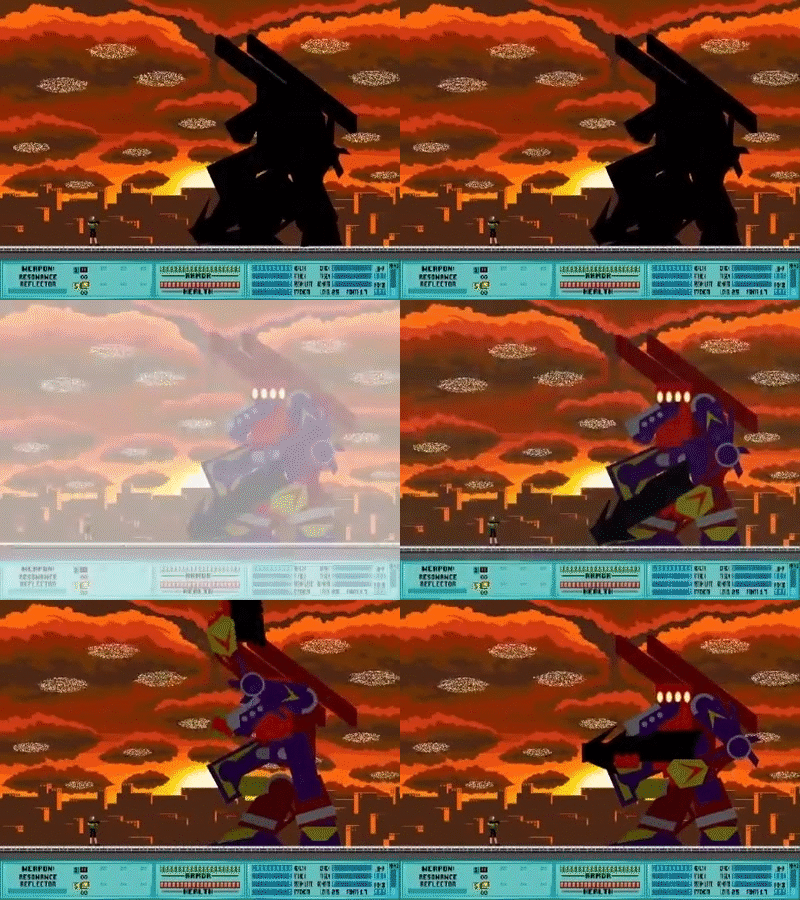
Anyway, there's something of a "bad route" in this game. You're absolutely free to kill every single alien you meet, Tasen or Komato. There's nothing stopping you. In fact, you're arguably justified, right? The Tasen nearly wiped out your planet, and the Komato are coming to finish the job. You're just defending what's left of humanity, right?
Even so, just like in Undertale, you're disincentivized from doing it. Iji becomes a much more violent and reckless person, to the point her brother fears her. You can read in many Tasen and Komato logbooks talk of "the human anomaly", which, while Iji is always hyped up to these alien races as being dangerous, is only really true on this route - there's always been doubters who believe in Iji's innocence. In fact, if you kill as much as possible, then once you beat Tor at the end of the game, you're alpha struck anyway as the remaining Komato decide you've shown the worst of humanity and you deserve it. And you kind of do.
One of my favorite moments in Iji is about 5-10 minutes before the Tor boss fight, actually. There's a break room, with a single terminal in it. If you interact with it, you get the names of every enemy in the game including their age, place of origin, their job, and their families. That's right, every single enemy in the game is named! Just for this moment! Just to make you feel a mountain of guilt and make you rethink your choices, right before the end, you get unskippable text reading out the names of everyone you've killed. It's a lot like Metal Gear Solid 3: Snake Eater in this moment - if you know, you know.
The message Iji leaves you with is such a strong one. What do you do when you're forced to extremes? Do you choose extreme pacifism, trying to make something good out of what's left, but going too far and sparing those who would take advantage of you in a heartbeat and hurt you and your loved ones? Or do you let your hurt, your hate, define you, murdering the Tasen and Komato, not exclusively because you want to fend them off and protect the earth, but also because your drive for revenge has turned you into a bloodthirsty killer? But beyond that... well, just read the lyrics of the credits theme:
At the end of days, at the end of time
When the Sun burns out will any of this matter?
Who will be there to remember who we were?
Who will be there to know that any of this had meaning for us?
And in retrospect I'll say we've done no wrong
Who are we to judge what's right and what has purpose for us?
With designs upon ourselves to do no wrong
Running wild unaware of what might come of us
So yeah, what do you think? I think there should be a lot more nuanced game stories out there, and the people who look at Undertale and just see the sans fight, or look at Deltarune and just see Noelle killing Berdly, are really missing out. One of the most rewarding and fun things is to think, have your ideas challenged, and feel yourself grow as a person. It's great to learn how to open up and accept things into your worldview, your philosophy, your approach to life, that you never knew you needed. Undertale changed Sunny's life for the better and set off a domino effect leading to where we are now, and leading to me meeting every one of you. We're super grateful for it. I can only hope more people open up to experiences like this, and hop off the bandwagon of hating on things they haven't tried, because they don't understand, or because people they respect seem to hate it too. People are less willing to give complex, beautiful stories a chance, and that's a shame.
Oh, and I hope I've highlighted a few awesome games you might want to try. Do note that Iji has a different kind of gameplay than Undertale, Deltarune, or Everhood, and the Deponia series is very long and at times the puzzles are incredibly confusing. I also was thinking of including OFF and HOME, but those games are special to us, especially to Sunny, for different reasons, and it'd take a whole second weblog post to elaborate on why.
Cheers! 
Please make the page give a pop-up warning when you would leave with something in the text field. I have tried typing my thoughts out here several times now and when backspacing, the text box got unhighlighted and I backed out of the page and lost what I wrote.
While a game with a single route is the easiest to write, it does ultimately railroad the player to guaranteed success as long as they don't stop playing. With games with multiple endings, managing to get the ending you want is earned not just on raw skill, but on having a certain level of understanding of the game world. Nobody talks about Undertale's neutral routes, but the fact that they are there gives weight to the pacifist and genocide routes. Completing either of those routes is not just playing a game, it's committing to something extra and seeing it through to the end.
I recently played a game where near the end of the game, a friend turned villain transforms the very world you live in into what they consider a utopia. none of the bad events that took place in the game ever happened, everyone, whether they were friend or enemy, was getting along. The player was given the choice to stay in this world or try and change it back. If you stayed, the game ended there. It wasn't expressly a good or bad ending. But things just ended there. Alternatively, you could go around and illuminate the truth to all your party members from throughout your journey, and then go and confront the one who made this new world. I thought about it a lot and realized that a happy ending given just felt incredibly cheap and worthless. If true happiness were handed out like candy, would anyone even know what happiness is?
I'm so sorry that happened. I've already tried to implement such a feature actually, the javascript is supposed to prevent page navigation (including the little all-in-one-page thing) if there's changed text. It must've broken :(
I totally agree. It's the kind of thing that makes you think, "If only there were more content and more routes", but that wasn't feasible for Undertale, and that's understandable, not to mention it may have lessened the importance and impact of the true pacifist and genocide routes. Actually, it makes me think of Fallout: New Vegas (at least what I've heard of it, I still haven't played it), where there's plenty of moral ambiguity and different ways many parts of the game can go.
Total shot in the dark, are you talking about Persona 5 Royal? If so, I played it as well. I'd like to believe happiness could be taken from anything, even a "fake world" like that, and that's just as valuable, and if it could fix some of the serious problems these characters faced, maybe it's not so bad. What I think they were going for, in the game I mentioned at least, was that someone else shouldn't be the one to decide what makes you happy, and you shouldn't be subject to someone else deciding how your life goes - but in my opinion that stance falls flat when you consider the dude's a therapist who carefully listened to all of your friends' doubts and insecurities, and made them new situations that really do benefit and help them, not to mention he's not really a villain and really does care. I think the writers could have done a better job with it, but I see what they were going for. I actually took the "alternate ending" where you live in the fake reality, unfortunately I didn't finish the playthrough after that for other reasons...
I have never played that game.
Happiness is happiness, and we all yearn for it. But what happens to that yearning when the very concept of what's real becomes blurred? Are you still you if you no longer want for a better world? Would you take guaranteed happiness if it meant someone else rewrites the very memories and personality of you and everyone you know and love to fit their specifications? If you do anything but say "yes" without hesitation, I think it's important to think about what makes you paws.
so after reading this post i had a whole conversation about it with Eir over discord. and she mentioned she kinda wished people would use this comment section more, so i said sure, i'll collect my thoughts and put 'em out there, invite more discussion. here they are for your perusal, netizens -w-
i think toby fox knew exactly what he was doing making sans the most difficult and arguably the most intriguing fight of the game. like... weird way to say this but i think it being "popular for the wrong reasons" is it being popular for exactly the right reasons. toby fox is a fan of OFF, and sans is based off the judge cat, y'know? but, y'know, in his own sansy way where instead of being a funny cheshire cat thing he's a funny scuzzy fat skeleton guy. toby knew it'd be one of the most eyecatching things about "the route you're not supposed to play".
after a decade of reflection, ultimately i don't agree with that. i think undertale's definitely a meditation on the choice of pacifism in video games and what it means to engage with a world, but i think that "the point of the genocide route is you shouldn't do it" is ultimately just the most obvious surface level take and there's more nuance to it than that. not that you're wrong about flowey at all, i mean you're completely correct about every way he parallels a player that can't let go of a game, and i'm really glad you pointed out that he does what he does because he loves Undertale and the people in the underground. he spent who knows how long unable to bear leaving the moment.
i just think that any player who wants to meaningfully engage with Undertale is actually fully encouraged to try the genocide route to understand where Undertale is coming from. like it's not there to not be played, it's there to be played. and in some ways it's also meditating on the differences between loving a story and loving people, and what it means to love a story that convinces you it is full of real people the first time it hits you.
and the experience of ultimately accepting you can't stay with a story forever and letting the characters within it become fond memories you take with you when all is said and done. this is something Undertale takes from Moon Remix RPG Adventure, another big inspiration. ultimately flowey's also there to be loved, and just like flowey's experience of love, to love a story is to take the nice parts and the unpleasant parts together and appreciate it in full. so you play the genocide route and you kill him, too. so you understand.
that seems weird, right? let me elaborate.
the genocide route is the way a player tries to understand flowey's state of mind, i think. you go in blind and he's just this fucked up angry little guy meant to give you a bad impression of the underground, to scare you for your own safety and make the obvious choice (pacifism) more meaningful
and you keep playing and he's still a fucked up weirdo and he even fucks up the end of the run where you try and save asgore! what a dick!!
but then he tells you to go back and be extra good friends with everyone in a way you weren't even allowed to be before for the very very best ending
so you go back and go into an ooky spooky lab and learn lore about the dead prince! and then you reach the end again and he IS the prince! what!
and you bring him back as an ensouled being just for a while, but you have to leave him behind! WHAT!!
it is at this point that the blind player who somehow doesn't know a thing about undertale but has fallen in love with asriel dreemurr and doesn't get to keep him considers playing the route that flowey implicitly represents, just to get it, and see why he is the way that he is.
and they play the route, and see what an experience it is killing everyone, see what it's like when the last scraps of engagement you can get out of the story are kicking everyone's sandcastles down and spitting in their faces and hitting them and killing them
and making them tell you what a baaad person you are because to them this is the only thing that has ever happened
and at the end, right before sans, flowey just tells you about himself, talks to a friend about his feelings for the first time since he died, processes his shit in a different way than he usually has to
and finally he sees you from the perspective everyone else saw him and spends his final moments as a participant in the same story he wrung out for everything it's worth
and you kill him while he begs for his life, and you understand how flowey feels. you don't get flowey until you walk in his metaphorical shoes.
i think chara coming in and hitting you with the bargain is one last thing to hammer in the themes of letting go, because through playing undertale, while the characters came to terms with letting go, you grew attached, and you're the last person in the story who learns the lesson.
'cuz like. the true pacifist ending after genocide makes your character flash glowy red eyes at the camera, sure. a spooky reminder that you've gotten everything you can out of those two endings. but does that actually affect the happy ending in your head? isn't the end already here? haven't you seen the good version? don't you have a choice about what you imagine the characters are up to now that it's over? given toby's apparent philosophy on filling in the blanks that the 10th anniversary stream showed, i don't think the point is that the golden ending is ruined forever, i think the point is it doesn't matter what's in the game anymore. it's over, you move on and take what's in it with you. (2/X)
my thoughts on the weird route are less crystallized because deltarune isn't finished yet but they're similar, as different as the weird route and the genocide route really are. i've said it before, but the big thing that makes the weird route feel so much wronger than the genocide route is that the genocide route is a vital part of undertale, but the weird route feels like a perversion of deltarune. eir touched on this, but my thoughts on this go further.
it is a perversion of deltarune, but the thing that deltarune is about is the perversion of deltarune. we're marching along the path of a prophecy that won't end well, to meet a demon we know nothing about, and clearly no one wants any of it. the good guys are trying to change it. the bad guys are trying to change it. Kris is part of both groups trying to change it. the Roaring Knight is the clearest force of the prophecy we have besides the prophecy itself and it's colluding with Kris.
and we don't know anything about any of it! we're implied to be the Angel from the prophecy and we don't know what the prophecy is, because we're just us! we're players who came to a game expecting to engage with a game, and as far as anyone can tell, everyone but Susie is exploiting that fact to use the force we represent to bring their own ends about. we don't even HAVE the full game yet. our ignorance is meaningful here!
what's the weird route? the weird route is us pulling one over on the characters. it's the route where we subvert the prophecy in some way that the characters don't get for once, instead of the other way around. there's a few ways we do this through the game, mind. the secret bosses are a completely separate way we pursue our own ends for unclear reasons. the SWORD route, tied in with the secret boss sidequest, is extremely weird-coded with the distinction of having little consequence except preparing the Fun gang more adequately for the terrible evils they face later.
the difference is in the order of magnitude. we use the character with a knack for breaking games, and break our game with her. we don't slip a detour in that doesn't change the prophecy, we fundamentally alter key story events. we commit a murder and we use the victim's best friend to do it, because as her best friend we psychologically condition and break her. and through it all it's hard to say that this is even us having an evil plan for these characters. because we aren't evil! we're just video game players and we don't know anything! the game's unfinished! we're still just playing the game to see where it takes us, but it's the path that no one wants or expects us to take.
it's so unexpected that it's not even signposted, at least in chapter 2. for a long time it was the secret datamined ooky spooky route that makes creepypasta things happen with unguessable lore implications. we live in a post 3+4 world, though, which means we do have the SWORD route. the SWORD route is interesting, right? why is it so Weird without being Weird at all?
deltarune's not finished yet, and we don't live in a post chapter 5 world yet, so there's a lot that's still just up to guessing, but in terms of raw themes it's the same thing as the weird route, just one layer of abstraction lower. or maybe the genocide route? you play a game differently than you're told to and do the evil things to see another side of it, and through this you see the full nuance of what the game represents. the experience is unpleasant, but at the end, you aren't a worse person, and what's more, you have something you didn't before. (3/X)
it's just that Kris sees it from your perspective this time, not theirs. and there is a horror to confronting them with their status as a piece in a game, but if you take it less literally, this is deltarune saying something about the game's player. if UTDR has sympathy/pity for the player that does awful evil things in video games to see what happens and doesn't even enjoy it, this is the clearest example of it literally happening. i think "games are supposed to be fun" is the correct choice here even if Kris doesn't agree with it. there's enjoyment to be found in their unpleasantness, and i think deltarune wants to engage with that, too.
ultimately, just like the genocide route, toby fox wants you to play all of deltarune, i think. deltarune's characters aren't any realer than undertale's. but instead of it being a way you understand one character, it's a way you understand every character. you go against where you're being steered with no regard for why you're being steered, and bad things happen that you maybe weren't even going for!
and that's how deltarune hammers home the terror of the force you present, and why everyone thinks you have to be so tightly controlled. it's the reason why Kris has to build their trust in you. it's the reason why no one can know about you. it's the reason why everyone's playing chess and giving you checkers. the weird route is how you grow empathy for Kris's situation even when they're at their most antagonistic with you, and a big way we understand that they aren't an evil figure in their duplicity, just a scared teen caught between a lot of other peoples' gambits.
and that's why i think the weird route is also something a player who wants to engage with deltarune will have to do, because i think understanding the weird route is a path to understanding deltarune, and i think understanding deltarune will be the key to getting the happiest version of the ending for everyone.
even though the weird route will probably also be the key to the worst version of the ending for everyone.
it's always darkest before the dawn. (4/4)